If you talk to anyone who has been on HDD crews for a few years, you will hear the same story: the day the signal disappeared halfway through a bore. Everything was going fine, then depth started jumping, pitch drifted, and suddenly nobody trusted the numbers anymore. The rig was fine. The mud system was fine. The problem was a tired, half-unknown transmitter in the drill head.
Most contractors do not fail because they bought the wrong rig. They struggle because their transmitter strategy is basically a box of random beacons. Different models, different ages, unknown history. On paper it looks like “plenty of spares”. On site, it means stress.
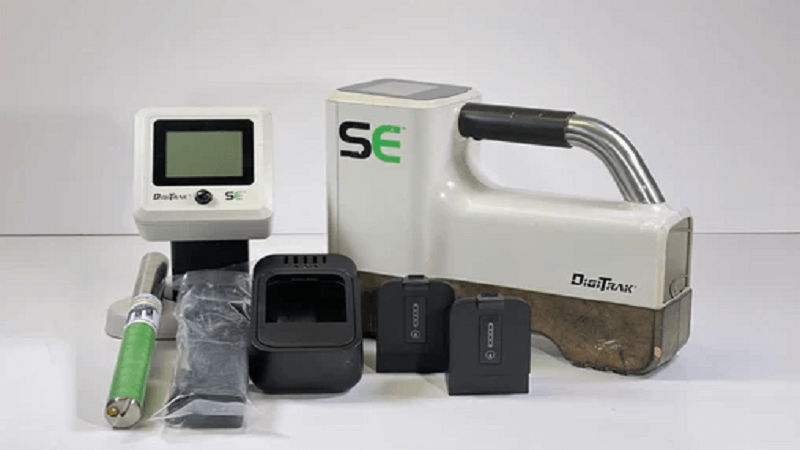
In this guest post, we will look at how to stop gambling on beacons and start treating your sonde inventory as a system. We will talk about why it pays to standardize around a small, clear set of Digitrak F5 compatible transmitters, where high quality refurbished DigiTrak transmitters fit into the picture, and how to turn your mixed pile of sondes into a predictable, profitable tool.
Why compatibility is more than a spec line
On a quote, a transmitter looks simple: model, frequency, depth range, price. But in the field, compatibility is what really decides whether that sonde makes your life easier or harder.
A transmitter is truly compatible when it:
- Talks cleanly to your specific locator model.
- Fits correctly into the housings you actually use.
- Uses battery types your crews already carry.
- Behaves in the ground the way your locator hands expect.
If any of those points are off, you get “ghost problems”: depth that looks wrong, intermittent dropouts, pitch that does not match what the driller feels in the rods. That is how simple bores become slow, expensive and stressful.
Standardizing around a defined set of DigiTrak compatible transmitters is basically a way of saying: “We know exactly which sondes belong with which rigs, and we know how they behave.”
One fleet, many rigs, one transmitter strategy
Most growing HDD companies do not run a single guidance system. A typical yard might have:
- An F5 or Falcon rig for the hardest jobs.
- One or two F2 or SE systems for everyday utility work.
- Maybe an older Mark or Eclipse unit still making money on simple bores.
If every rig keeps its own random stash of beacons, no one really knows which sonde is trustworthy. A much better approach is to see all sondes as one shared pool, then slice that pool into clear categories:
- By locator platform (F5, F2, SE, Mark, Eclipse, etc).
- By role (premium primaries, everyday workhorses, backups, training units).
- By condition (new, refurbished, flagged for testing, scrap).
Once you have that structure, it becomes much easier to decide which rig gets which beacon and why. Your best transmitters go on the highest consequence jobs. Your solid mid-range units handle the bread and butter bores. Anything suspicious gets pulled for testing instead of “just one more shot”.
Where refurbished sondes actually make more sense
A lot of people still hear “refurbished” and think “second class”. On HDD sites that is usually the wrong way around.
A random used beacon from a classifieds listing is a gamble. You have no idea how many hours it has seen, whether it was ever flooded, or if it was already behaving strangely for the last owner.
Proper refurbishment is different. Good refurbished sondes have usually been:
- Pressure tested for leaks.
- Checked on depth and pitch against a reference system.
- Run under load to catch intermittent failures.
- Fitted with new o-rings, caps and any worn components.
That process turns a mystery beacon into a known tool. For many fleets, this is the sweet spot: you get predictable performance at a lower cost, so you can afford to have more working transmitters in rotation instead of babying one or two brand new units.
The key is to be picky. Only treat something as refurbished if it really has been tested, documented and warrantied, not just wiped off and put back in a box.
How many transmitters does a rig actually need
From the office, it is tempting to look at a rig and say: “It has a locator, it has a sonde, we are good.” But anyone who has watched a beacon die halfway through a road crossing knows that one per rig is not a plan, it is a hope.
A realistic minimum per active rig looks like:
- One primary transmitter in the drill head.
- One identical backup on the truck, ready to swap in.
- At least one additional field-ready sonde at the yard that can be delivered quickly.
For rigs handling deeper, longer or interference heavy projects, you might add a specialized long-range or low-frequency unit as a fourth option.
Yes, that is more upfront cost. But compare it with the cost of one lost day on a job. Once you include crew time, rig time, extra traffic control and client pressure, a single day of downtime will often pay for your entire “extra beacon” budget for the year.
Daily habits that quietly double transmitter life
A smart buying strategy is only half the battle. The way your crews handle sondes day to day decides whether those transmitters live a long, boring life or die young at the worst possible moment.
Some simple, high-impact rules:
- Clean threads and shoulders before you open or close a housing so grit does not cut the o-rings.
- Inspect seals every time you change batteries, not “once in a while.” Replace anything flattened, nicked or shiny.
- Keep battery compartments dry and free from corrosion.
- Never mix old and new batteries in the same beacon.
- Store transmitters in padded cases, not rattling loose in steel toolboxes.
- If a sonde starts giving jumpy or inconsistent readings, pull it and tag it for testing. Do not force it through a critical bore.
These habits take minutes, but they are usually what separates fleets that are constantly “fighting the signal” from fleets where guidance feels almost boringly reliable.
Turning beacons from a headache into a quiet advantage
At first glance, transmitters look like small details next to rigs, recyclers and mud systems. In practice, they are the tiny pieces of hardware that decide whether your bores go smoothly or become expensive problems.